- Avinash's Newsletter
- Posts
- The Invitation to Your Best Friend
The Invitation to Your Best Friend

Avinash Priya
October 21, 2025
Overthinking Is My Best Friend
Many people will tell you to stop overthinking, claiming it causes anxiety, slows you down, or makes you miss out on real life. They might say you’ll get stuck in your own head. It’s true that overthinking can be overwhelming, paralyzing, or pull you so deep into your thoughts that you forget to move. The author of Overthinking Is My Best Friend has lived this experience, having looped on decisions for days or ruined restful evenings by replaying things said long ago.
However, this isn’t the whole story. The author also built their life using this same capacity for deep thinking. They’ve solved problems by thinking longer than others, anticipated roadblocks, mapped contingencies, and noticed quiet signals.
The central idea of this book is an invitation to stop treating overthinking like a flaw to fix and to start seeing it as a tool you haven't yet learned to use. Maybe overthinking isn’t your enemy; perhaps it is just a part of you that no one ever taught you how to listen to.
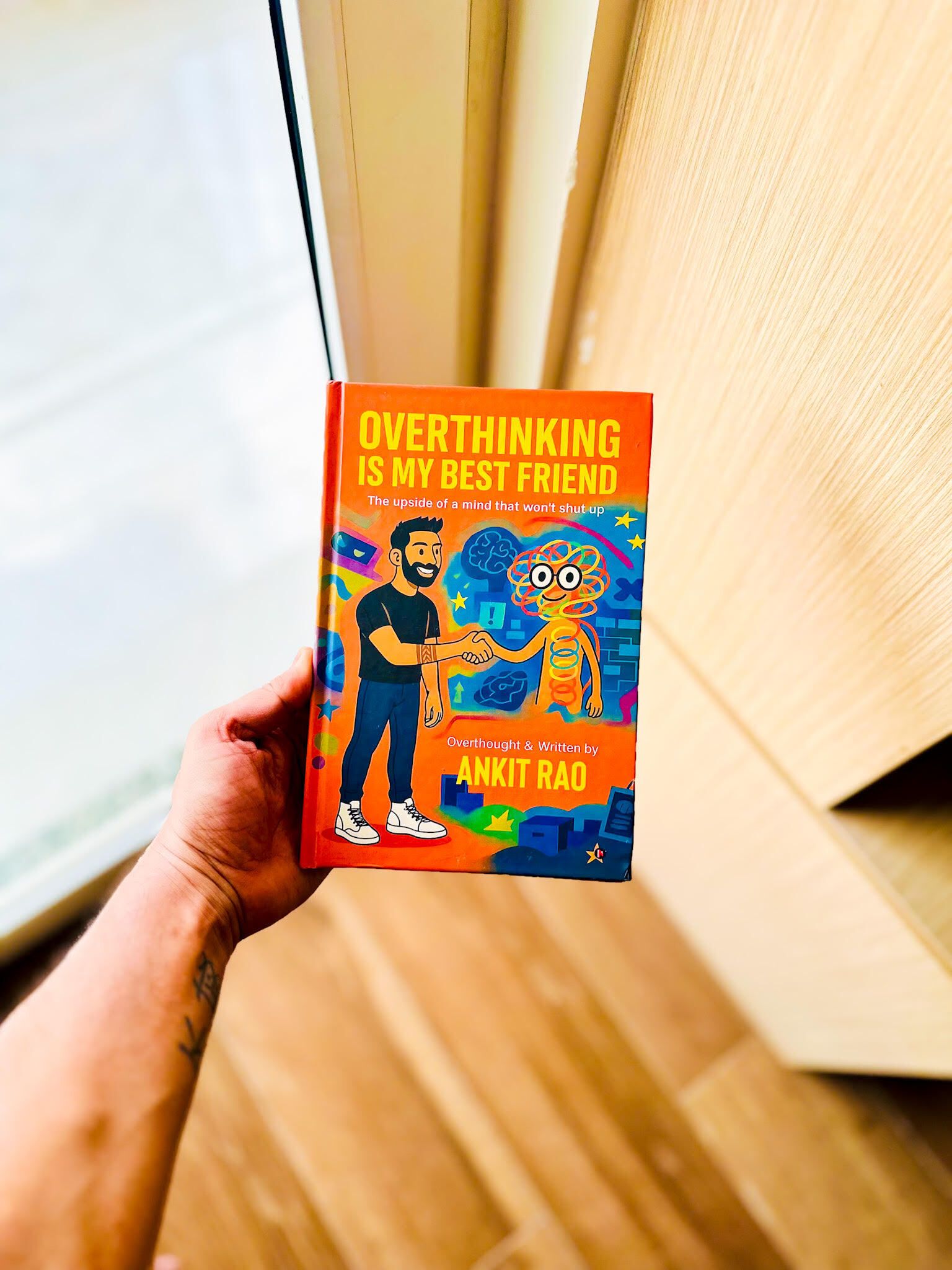
This is not a self-help book, a cure, or a promise of five hacks to stop overthinking. Instead, it invites you to rethink the notion that thinking too much is automatically a problem. Like anything powerful, overthinking can be dangerous when left unchecked, but it can also become a "playground".
Too much of anything—even too much ambition or kindness—can be a problem. Therefore, the goal isn't to avoid "too much," but to understand how much of something still serves you. The author prefers to be "too thoughtful" rather than "too dismissive".
Your thoughts are not stupid; they are signals trying to help you, protect you, or prepare you for something. The author wants to learn how to think better—with structure, clarity, and intention. This book offers a new lens. It’s about becoming kinder to your mind.
Why You Should Read Overthinking Is My Best Friend
Many people advise you to stop overthinking, but this book offers a radical invitation: to rethink the idea that thinking too much is automatically a problem. This is not a self-help book promising a cure or five quick hacks. Instead, the author invites you to stop viewing overthinking as a flaw to fix and start seeing it as a powerful tool you haven't learned how to use yet. It is an invitation to explore what happens if you stop fearing your deep thoughts and start understanding them instead. The author shares their life experiences—through childhood, work, and identity—to show the role deep reflection has played. This is your chance to become kinder to your mind, moving away from the belief that being "too thoughtful" is automatically a problem.