- Avinash's Newsletter
- Posts
- New Post
New Post

Avinash Priya
June 18, 2025
From Humble Beginnings to Global Visionary: The Inspiring Journey of Dileep Kumar
This newsletter delves into the remarkable life journey of Dileep Kumar, the subject of the memoir "The Malabari Who Loved His Ferrari," tracing his path from a small Indian town to becoming a successful entrepreneur and a man of profound wisdom in Dubai. His story is a testament to perseverance, integrity, and the power of dreams.
Early Life and Formative Influences
Born on January 29, 1969, in Madras (now Chennai), India, Dileep Kumar's early life was shaped by modest beginnings and a strong family ethos. His parents, A. V. Narayanan and Sarojini, instilled in him values of kindness and self-made success, with his father leaving his simple farming family in Kerala to become a bus driver in Madras, determined to improve their fortunes.
Dileep’s childhood in Chennai, was filled with simple joys like kite flying and marble games, where his "love affair with colours and designs began". He attended Model School alongside his sisters, Pushpa and Sajana. The stark contrast between affluent children arriving in luxury cars and his own journey in a cycle rickshaw ignited a deep resolve within him to overcome inequality and provide a privileged life for his future children. This early exposure also sparked his lifelong fascination with cars, symbolizing aspiration.
A significant shift occurred when his family moved back to their ancestral home, tharavad, in Edappal, Kerala. Life there was simpler, without electricity, surrounded by nature and a large joint family. Here, he learned valuable lessons from close-knit community figures like his neighbor, Parutty Chechi, who treated him like her own son.
The Spark of Ambition: Cheriyachan's Enduring Impact
A pivotal influence in Dileep’s life was his uncle, (A. V. Balakrishnan), a civil engineer working for BAPCO in Bahrain. Dileep’s childhood hero, not only generously supported his education but also brought gifts from the Gulf, sparking Dileep’s imagination.
A simple Staedtler pencil, "Made in Germany," gifted by Cheriyachan, was particularly impactful. This pencil ignited Dileep’s curiosity about quality, innovation, and the world beyond India, setting his imagination "soaring across continents and cultures". Cheriyachan's stories and a book about Korea further fueled Dileep's desire to travel and explore different parts of the world, envisioning future journeys to places like Korea, Singapore, the U.S., and the U.K.. This also instilled in him a "lifelong craze for cars" and a desire to live a "glamourous lifestyle".
Foundational Life Lessons:
Early Rising: Learned from a childhood game of picking Kannimanga (small green mangoes), a discipline he maintains to this day, believing it brings mental clarity and creative rejuvenation.
Sharing Success: Through the same mango-picking game, he learned the "joy of sharing" and the importance of empathy and generosity, concluding that "our success mantra... should be shared with others. The bottom line: we shouldn't be selfish".
Perseverance & Integrity: His father's mantra of "chop your own wood and it'll warm you twice" resonated deeply, advocating for a self-made life. Dileep developed a love for games, valuing "integrity and striving to achieve success through honest means".
The Road to Dubai: Overcoming Obstacles
After earning a Diploma in Civil Engineering, Dileep gained initial experience with local construction firms. At 21, he took a government job at Peppara Dam, but his dreams of working in Dubai persisted. Against his parents' strong disapproval, he made the bold decision to resign, determined to reach Dubai via Bombay (Mumbai).
His journey to Bombay in 1990 at age 21 was marked by challenges and learning experiences. He encountered Ummer, a civil engineer struggling to find work, which underscored the "importance of hard work and taking on any available opportunity to support one's family". In Bombay, he faced cramped living quarters, sharing a "minuscule" three-by-three-meter room with five other men, and enduring long queues for shared bathrooms. Despite these hardships, he remained focused on his dream, viewing obstacles as "temporary".
He secured a job as a draftsman at Niranjan Pandya and Harshad Dholakia Architects. His initial attempt to move to Dubai was thwarted by the Kuwait-Iraq War in 1991, leading Wade Adams Company to cease recruitment. Heartbroken, he returned to Bombay, where his former employers graciously re-hired him. A month later, in February 1991, he received a new job offer in Dubai from Ahmed Bhai of Trust Travels Private Limited. He departed for Dubai with only $10 USD in his pocket, but was "rich in dreams".
Building an Empire: Heilbronn Construction LLC
Dileep started his career in Dubai as an Assistant Quantity Surveyor at UTCC Wade Adams. He lived in a labor camp, which, though basic, was an improvement over his Bombay experience. He absorbed lessons on "punctuality and professionalism" from his project manager and began to pursue his personal interests, like taking up golf in his thirties after acquiring a used set.
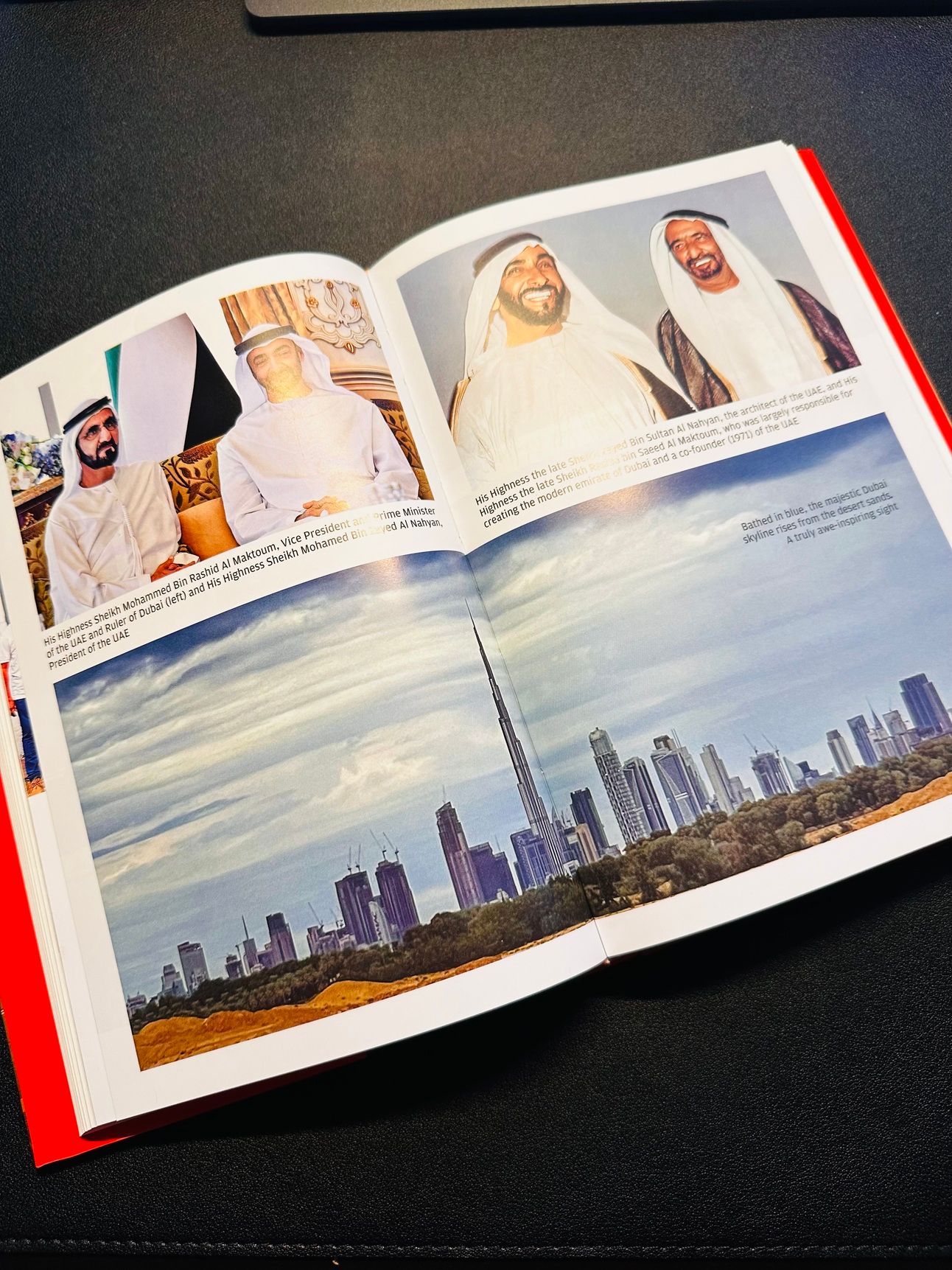
After nine years in employment, and despite lucrative offers to stay, Dileep realized he needed to carve his own path. In 2002, at age 33, he founded Heilbronn Construction LLC, with the auspicious date 02-02-02. He chose the name "Heilbronn" after a quaint German town, inspired by the influential Staedtler pencil from his childhood. His company's motto was clear: "Client satisfaction and service were paramount".
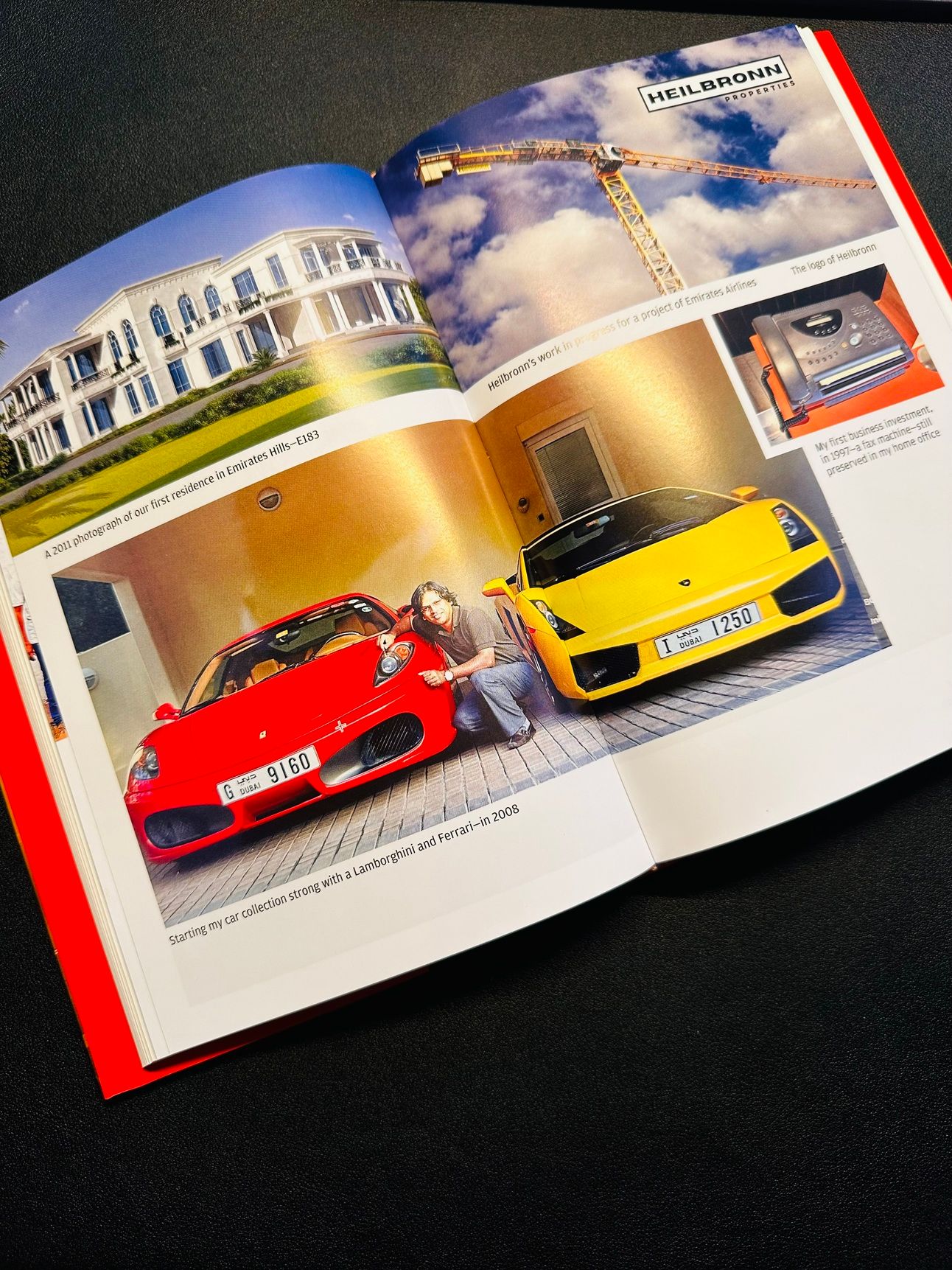
Heilbronn's first major contract came unexpectedly from Emirates Airlines, a temporary access road for their Al Maha resort. Despite initial hesitation, he took the risk, submitted a "modest bid" of AED 150,000, and delivered the project "on time and without complications," marking a turning point for the company. By 2003, at 34, Heilbronn had reached the million-dollar mark, thriving amidst Dubai's rapid development, fueled by soaring oil prices and the government's strategic vision. The company expanded to Heilbronn Properties in 2007, focusing on luxury villas and apartments, with Dileep as the lead designer.
Personal Journey and Philosophy
Dileep's personal life evolved alongside his professional success. He married in 1997 through an arranged marriage, and while it had its challenges, he valued their initial seven years before deciding to delay parenthood. Their sons, Gautam (born 2004) and Aryaan (born 2007), were both born in Dubai.
In 2010, after 13 years of marriage, Dileep and his wife amicably divorced, with her entrusting their children to his care. He emphasizes the importance of mutual respect and shared responsibility, even amidst separation. As a single father, he took on both parental roles, prioritizing his children's happiness and providing a stable, loving environment. He made a conscious effort to involve his children in family decisions, believing it empowers them.
After his divorce, he dated Song Lee, a South Korean woman whose intelligence and grace captivated him. Despite a deep connection and extensive travels together, their relationship ultimately ended due to geographical and cultural differences, as neither could permanently relocate. He later had a brief, temporary relationship with Sofia, a European model, but quickly realized the connection was not genuine. He attributes these experiences to reinforcing that "no woman could replace Song Lee".
In 2005, at 36, Dileep made the pivotal decision to settle in Dubai, considering it his "wisest decision in life". He bought a 3,800 sq. ft. villa in Meadows-9, financing it with a bank loan, unwavering in his faith in Dubai's potential despite others' doubts. Later, in 2011, after his divorce, he and his children moved into a 25,000 sq. ft. villa in Emirates Hills, a symbol of his hard work and dedication. However, prioritizing privacy and family contentment, they later moved to a smaller, more intimate home in Meadows 4.
Key Life Philosophies:
Work-Life Balance & Semi-Retirement: In 2012, Dileep chose to enter "semi-retirement," prioritizing "happiness, peace, love, health, friends and family" over excessive wealth. He delegated daily operations to experienced managers, freeing up time for personal pursuits like travel, family, and sports. He advocates for sharing wealth with those in need, emphasizing timely and discreet assistance.
"Five Circles Concept": A framework for life, categorizing relationships and responsibilities into: Love and Gravity (parents, teachers), Inspiration (friends, colleagues, rivals), Responsibility (bosses, clients), Protection (family, spouse, children), and Higher Purpose (faith/Nature). Focusing on these circles brings greater fulfillment.
Continuous Learning: He believes the "world itself is a rich source of knowledge," learning from "people and Nature" rather than solely from books.
Humility and Gratitude: Despite his immense success, he vowed to "never lose sight of my roots".
The Life Calendar: Inspired by his father's passing in 2008, he meticulously plans his life on a calendar, reminding himself of the "fragility of life" and to live each day with purpose.
Achievements and Interests:
Dileep's success allowed him to indulge his passions:
Cars: In 2007, he acquired a Ferrari F430, a childhood dream and "ultimate symbol of success". He also owns a Lamborghini, Jaguar, Mercedes-Benz, and BMW X-5. He has passed his love for cars to his children, who earn pocket money by washing them.
Golf: Despite initially thinking golf was out of reach, he joined the Dubai Creek Golf and Yacht Club in 2007 and even represented the UAE in the 2006 BMW World Amateur Golf Cup Final in South Africa. He views golf as a metaphor for life, demanding discipline and resilience.
Philanthropy: He supports an orphanage and founded the Edappal Tennis Academy to provide free training to underprivileged children in his hometown.
Author: He recently published his memoirs, "The Malabari Who Loved His Ferrari," with all proceeds going to people in need, aiming to inspire the younger generation.
Legacy and Future Outlook
Dileep Kumar's life story is a powerful narrative of ambition, resilience, and growth. He believes that his achievements are the outcome of his "own efforts and decisions" and attributes his success to "God's grace" and the support of his "fellow travellers". He aims to inspire the new generation to "dream big and persevere," emphasizing ethical business practices. He declares that if given "a hundred lifetimes," he would choose to "relive this very one," embracing both the joys and challenges that shaped him.
His journey embodies the transformation of Dubai itself, a city that "has blossomed into my dreamland," where dreams "take root and flourish". Dileep Kumar stands as a testament to the idea that with unwavering resolve and a focus on intrinsic values, one can truly build a life of profound fulfillment and leave a lasting positive impact.